Iva Kaufman Associates

The Sun, Reconsidered

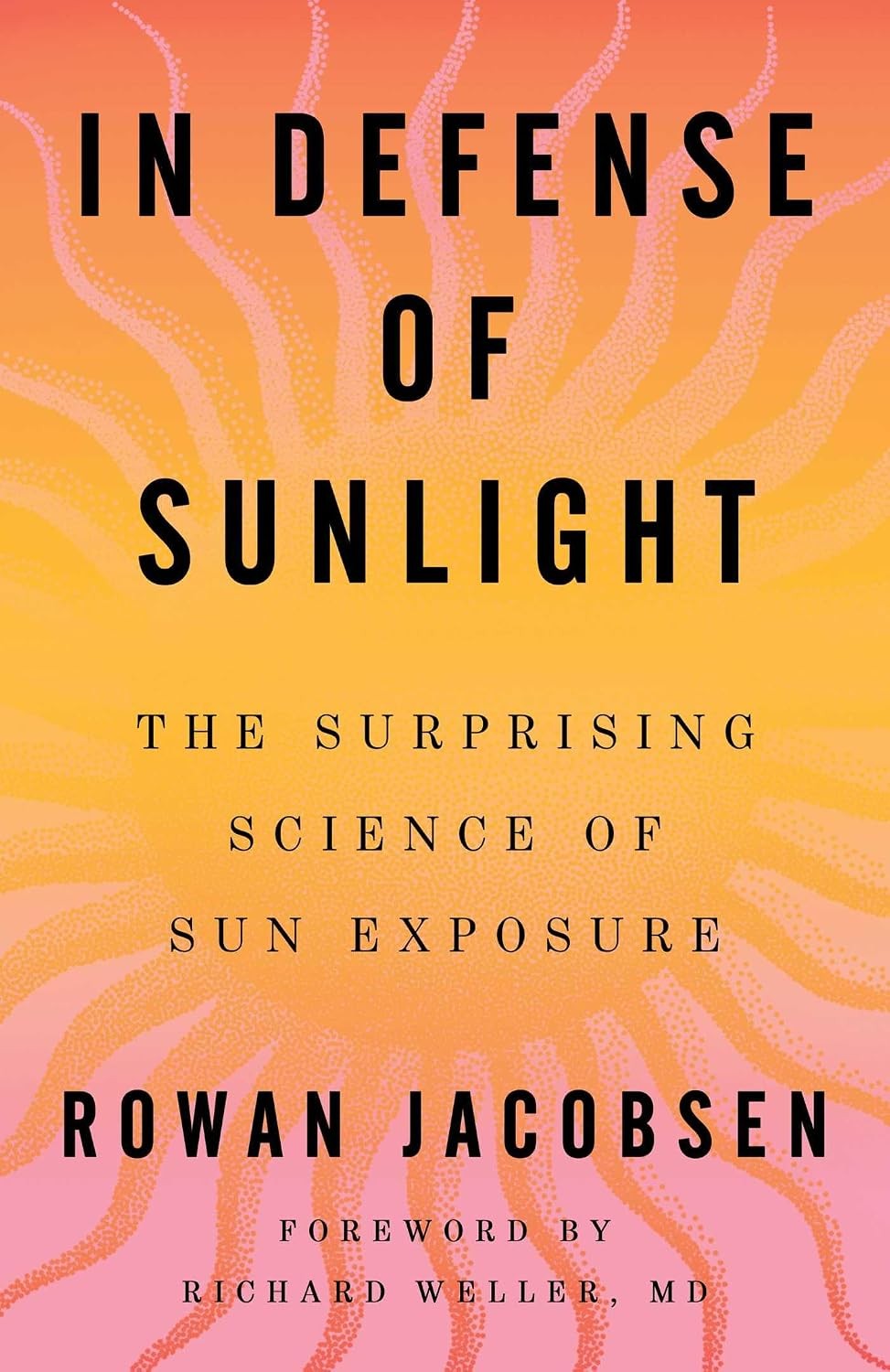
Rowan Jacobsen has built a career writing about the science most people get wrong. His new book, In Defense of Sunlight: The Surprising Science of Sun Exposure (Simon & Schuster, June 16), takes on one of the most settled pieces of public health advice of the last forty years: stay out of the sun. Jacobsen's argument is that the advice overshot, and the evidence has been accumulating quietly in the journals for years.

We're flagging it for a reason beyond a good summer read. The science he pulls together speaks directly to the work of one of our clients, Cytokind.

In Defense of Sunlight

What the book says

Jacobsen's case rests on a body of research that rarely makes it into a doctor's office:

  • A 20-year follow-up of nearly 30,000 Swedish women (the Melanoma in Southern Sweden cohort) found the sun-avoiders died sooner. Nonsmokers who avoided the sun had a life expectancy close to smokers who got plenty of it, which led the researchers to rank sun avoidance as a mortality risk on the same order as smoking.
  • Sunlight does far more than make vitamin D. Exposure releases nitric oxide in the skin, which lowers blood pressure and cardiovascular risk. It sets circadian rhythm, calms inflammation, and shapes immune function.
  • Sun avoidance tracks with heart disease, dementia, depression, several cancers, and autoimmune conditions. Some of these go the opposite direction of what most people assume.
  • The melanoma fear is overstated. Risk tracks early-life sunburns rather than steady cumulative exposure, and indoor office workers show higher rates than people who work outside.
  • He devotes real attention to narrowband UVB lamps, the roughly 300 to 310 nanometer band used in dermatology for decades to treat psoriasis, with no corresponding rise in skin cancer.


This isn't fringe publishing. The Wall Street Journal, Nature, Kirkus, and Publishers Weekly have all reviewed it, and Jacobsen is on a national press tour.

Why it matters for Cytokind

Cytokind brings clinically established narrowband UVB phototherapy (the Phothera device line) to patients. The category was born decades ago in dermatology, treating psoriasis, vitiligo, and eczema. Cytokind's work is extending that proven, physician-prescribed therapy to other conditions driven by systemic inflammation.


Two threads connect the book to that work.


The first is safety. Jacobsen's reporting on narrowband UVB's decades-long track record covers the exact wavelength band Cytokind's devices use.


The second is the mechanism. The spine of the book is that light works through pathways like immune regulation and inflammation, not vitamin D alone. That premise is exactly what underwrites Cytokind's move beyond skin conditions. When the public conversation starts treating light as something that acts on the immune system, the ground Cytokind is building on gets firmer.


One distinction is worth keeping straight. Jacobsen writes mostly about natural sunlight and the long vitamin D debate. Cytokind operates in a narrower, more clinical space: targeted, prescribed narrowband UVB at specific wavelengths and doses, delivered under a physician's care. The book widens the public's willingness to take light seriously as medicine. Cytokind lives at the prescription end of that same idea.


For a company in Cytokind's position, timing like this is a gift. A patient or physician who has read the book, or simply absorbed the headlines from the press tour, comes to the conversation already warmer to the premise. The pitch no longer starts from scratch.


We'll be watching where this goes. If the topic interests you, the book is worth the time. If you want to learn more about Cytokind, give me a holler and take a look at www.cytokind.net.

Facebook  X  Instagram  Web